Visitor Badging
Self-Expiring Visitor Badges
Badges that turn visibly void on their own a set time after activation, so one that leaves the building cannot be quietly reused. Authorized Brady dealer, quoted to order.
Request a quote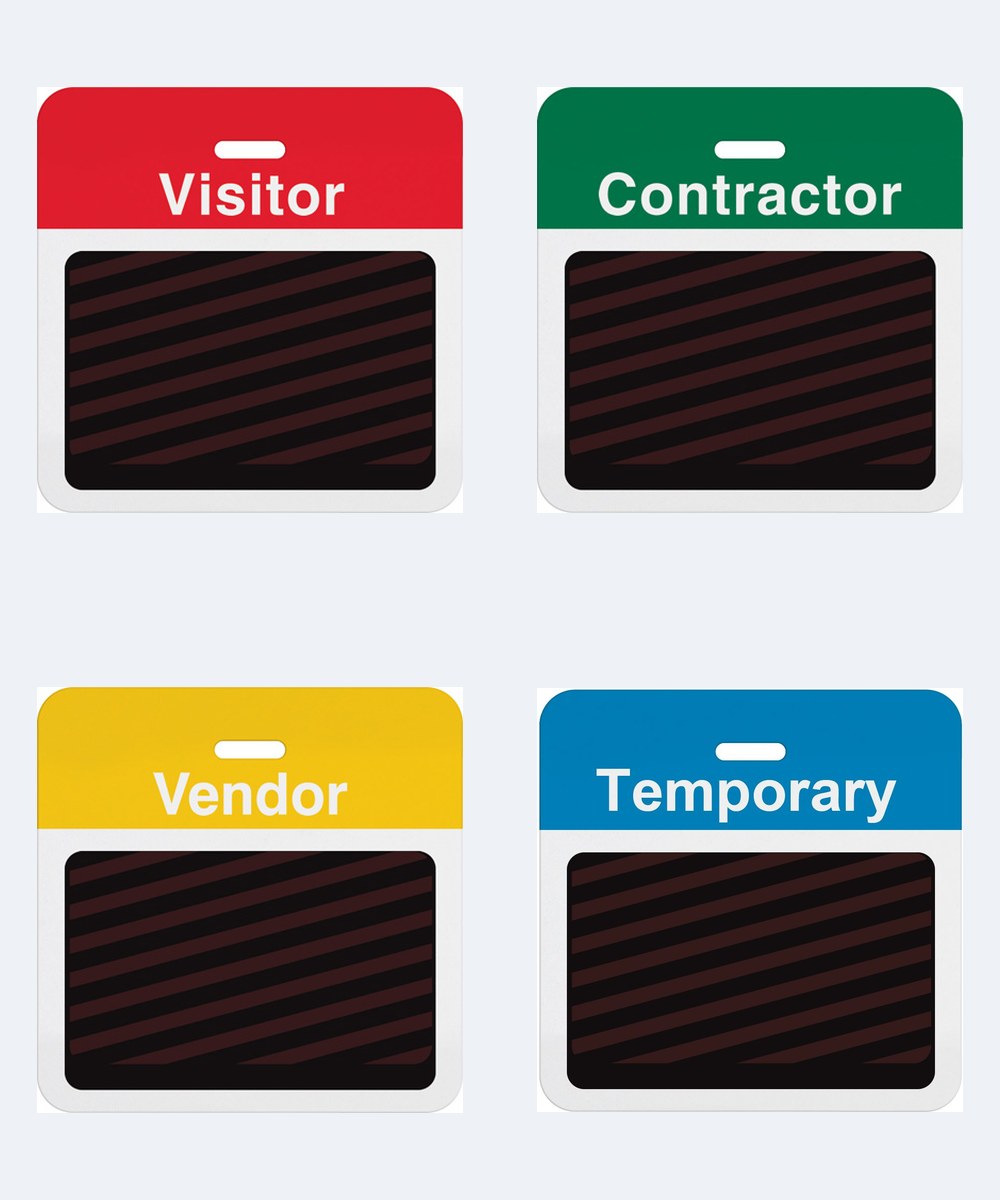
A self-expiring visitor badge is a badge that stops being valid on its own. Once it is activated, a colored pattern migrates through the badge over a set period until the front reads as void, so a badge that walks out of the building and comes back the next morning is obviously dead on sight. No one has to remember to collect it, and no one has to trust that it was collected. We are an authorized Brady dealer, and TEMPbadge is the Brady People ID expiring badge line, so we can quote expiring stock alongside the printer, the ribbons and the clips that go with it.
What a self-expiring badge is, and what the void marking actually is
Underneath the printed face of the badge there is a second layer holding a dye and a timing medium. The badge is inert until it is activated. From the moment of activation the dye begins migrating through the material at a rate the manufacturer has tuned, and after the intended window it reaches the front face as a visible pattern, usually red bars, a diagonal stripe, or the word VOID or EXPIRED across the badge.
Two things follow from that, and they are the two things most people get wrong on a first order.
The first is that the process is one-way and cannot be reversed, paused or restarted. That is the whole security value. A badge cannot be quietly rehabilitated by putting it back in a drawer.
The second is that the clock starts at activation, not at manufacture and not at printing. An unactivated badge sits in a box doing nothing. This is what makes the product practical for a front desk that has quiet weeks: you are not buying a countdown that runs down whether you use it or not.
Do you actually need expiring badges?
We would rather ask this than sell you a case, because the honest answer is that plenty of front desks do not need them.
The test is whether badges physically come back. If a visitor is escorted the entire time they are on site and hands the badge back at the desk on the way out, a plain printed badge on plain stock does exactly the same job for less money, and you should spend the difference on stock depth instead. Expiring badges earn their cost in the buildings where badges leave: a multi-entrance site, a campus, a plant with a separate contractor gate, an office where visitors let themselves out through the lobby, anywhere the desk cannot realistically guarantee collection.
The failure mode they prevent is specific and worth naming. A badge that is kept and reused is worse than no badge at all, because it carries the authority of your system without any of the checks. Somebody walking a corridor with a valid-looking visitor badge from three weeks ago is not challenged by anyone. That is the risk you are buying out of.
They also do a quieter job that has nothing to do with security. They give the front desk a reason to say something. Handing over a badge that expires tonight makes the rule visible and conversational instead of adversarial, which matters more than it sounds when the person on the desk is not a security officer and does not want to be one.
Time windows, and picking the right one
Expiring stock is made in a range of windows, from a few hours through one day, several days, a week and longer. Picking the window is simpler than it looks if you think about the natural unit of a visit rather than about hours.
Most sites need only two:
- A one-day badge for ordinary visitors, interview candidates, vendors and deliveries. This is the workhorse and it will be the large majority of what you use. It voids overnight, which lines up exactly with how people think about a visit.
- A longer badge for contractors, auditors, temporary staff and anyone on site for a defined stretch. A week is the common choice.
A short window measured in hours is a specialist item. It is genuinely useful for high-security areas and for tours, and it is a nuisance everywhere else, because a visitor whose badge voids while they are still in the meeting has to come back to the desk and you have spent a badge for nothing. If you are unsure, start with a one-day badge. It is very rare for that to be the wrong first answer.
The mistake worth avoiding is buying one long window and using it for everything on the theory that it covers all cases. It does not: a week-long badge issued to a one-hour visitor is valid for six more days than that visit needed, which is the exact thing you bought expiring stock to stop.
What starts the clock, and why that matters more than the duration
Activation is where an expiring badge program succeeds or falls apart, and it gets less attention than the duration does.
Broadly there are two approaches. Some expiring badges are activated by hand: the person at the desk peels a tab or folds a section of the badge, which brings the timing layer into contact and starts the process. Others are activated mechanically as the badge is pulled from a small activator or dispenser, so the act of taking the badge is the act of starting the clock.
The difference matters because the manual method has a step a busy person can skip. If the desk is three deep on a Monday morning and the tab does not get pulled, you have issued a badge that will never expire, and it looks identical to one that will. It is not a design flaw so much as a fact about humans, and the fix is to pick the method that matches how your desk actually runs rather than the one that is cheapest per badge. A desk with one trained person who does this all day is fine either way. A desk covered by whoever is available is not.
Whichever you use, build one habit into the process: check that the badge is activated before it leaves your hand, not after. It is a two-second look and it is the only check in the entire system.
Handwritten, printed, or a mix of both
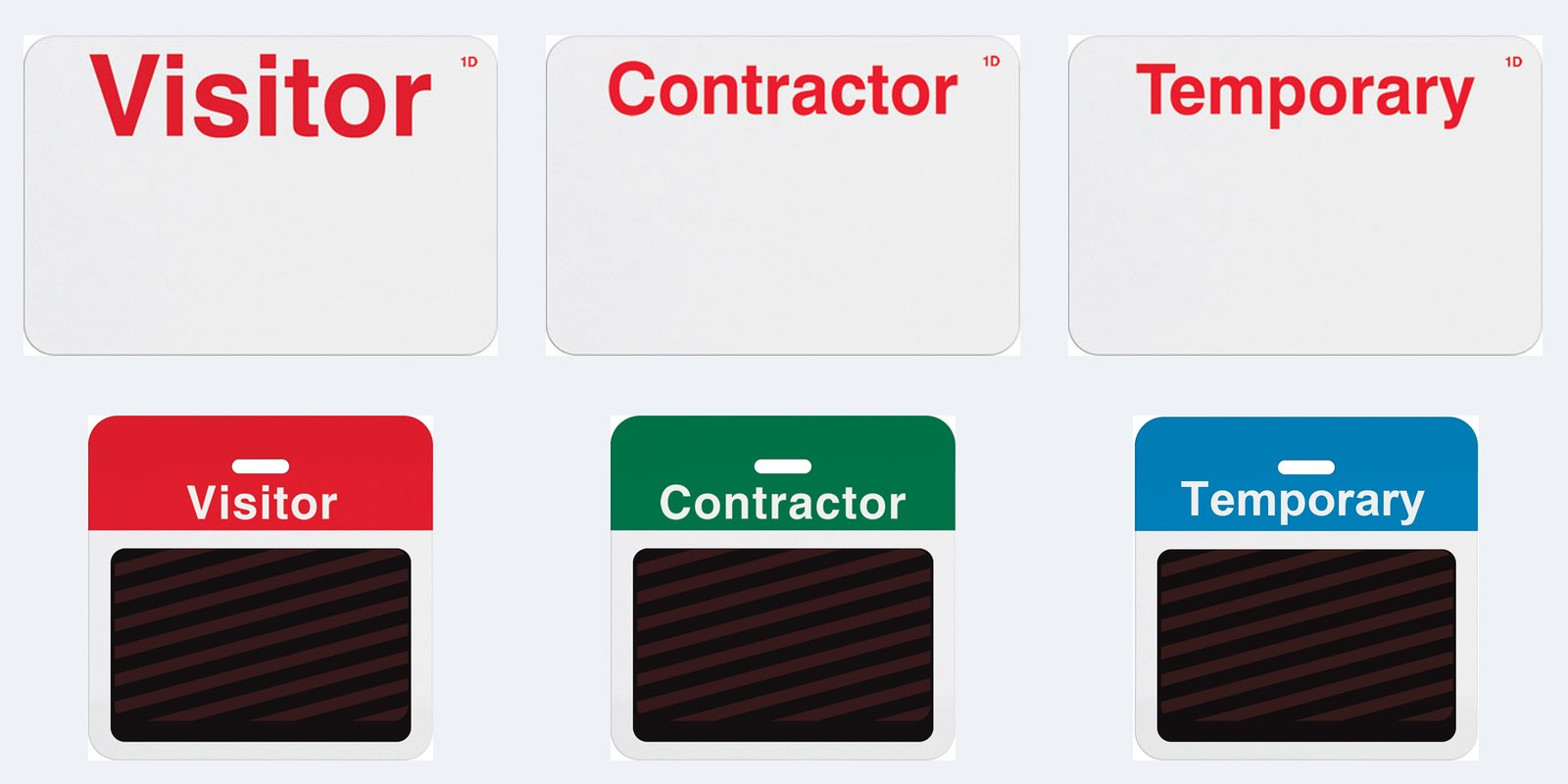
Expiring badges come in versions you write on with a pen and versions designed to be printed, and you do not have to choose only one.
Handwritten badges are fast, cost less, and need no equipment, which makes them the right answer for a low-volume desk or as the fallback for the morning the printer will not cooperate. What they cannot do is look like part of your organization or carry a photo, and legibility depends entirely on whoever is holding the pen.
Printed badges look considerably more deliberate, which is worth something in a lobby, and they can carry a host name, a time, a department, a barcode or a photo taken at the desk. The important caveat is that not every expiring badge stock suits every printer, and this is worth settling before you order a case rather than after. Tell us what printer sits on the desk and we will confirm what will actually run through it. That one question prevents the most expensive mistake in this category.
Plenty of sites end up running both: printed badges as the standard, a pad of handwritten ones in the drawer for overflow and outages. If you go that route, keep the two visually distinct so a handwritten badge is not mistaken for a printed one that failed.
Contractors, vendors and visits that last more than a day
Long visits are where visitor badging usually gets sloppy, and they deserve their own decision rather than an exception to the visitor process.
A contractor on site for three weeks does not want to queue at reception every morning, and the desk does not want to badge them thirty times. The temptation is to hand over an employee badge, or a visitor badge with no expiry, and both are mistakes: one gives a contractor a credential you now have to track and revoke, and the other is an unexpiring badge in the wild with your name on it.
The better shape is usually a longer-window expiring badge with the end date printed on the face, reissued for each stretch of work. It gives the contractor something durable enough to be practical, and it gives you an automatic end. Where somebody genuinely needs to open doors, that is a different product and a different process: they need a real credential with a defined end date, which is what our prox and access card programming service exists for. The rule of thumb we would offer is that a visitor badge should identify, and only a tracked credential should unlock.
Storage, ordering ahead, and the one thing to watch
Unactivated expiring stock is stable, but it is not indefinite: the timing chemistry is a real material and manufacturers give it a shelf life. That has one practical consequence, and it points the opposite way to how people usually buy consumables.
With plain card stock the advice is straightforward, buy roughly a year's worth, since it does not expire and larger packs cost less per card. With expiring badges you want a real estimate rather than a maximum order. Take your visitor traffic in a normal month, add the month with the audit and the inspection and the hiring push, and buy against that with a sensible margin rather than filling a cupboard. Ask us for the shelf life on whatever stock you settle on and we will confirm it on the quote.
Keep them somewhere ordinary and dry. Heat is the thing to avoid, so not on top of a radiator, not in a car, not in a window. And keep a reserve of plain blank ID card stock behind the expiring badges, because if the expiring stock runs out on a Tuesday you still have to badge whoever is standing at the desk.
Where this sits in the rest of your visitor process
An expiring badge is one component, not a visitor management system, and it is worth being clear about the difference before you buy.
What the badge does is remove one specific failure: the reused credential. What it does not do is record who was in the building, notify a host, check somebody against a list, or produce an evacuation roll call. Those are the job of your sign-in process, whether that is a logbook, a spreadsheet, or software, and an expiring badge works with all three because it does not care how the name got onto it.
If you are building the whole thing rather than just buying stock, start with our visitor badge printing and front-desk setup page, which covers the printer, the ribbon, the workflow and what to keep on hand. Then come back to the badge itself. Most desks get better results from a simple process everyone follows than from a sophisticated one that gets bypassed on a busy morning, and the badge should be the easiest part of it.
Tell us how many visitors you see in a normal week, whether badges come back, and what printer is on the desk. That is enough for us to quote the right stock and tell you plainly if you do not need it.
FAQ
Expiring badge questions, answered.
How does a self-expiring badge work?
When does the timer start?
Can an expired badge be reset?
What time window should we order?
Can we print on expiring badges?
Do we need these if visitors are escorted?
How long does unactivated stock keep?
Is TEMPbadge the same thing?
Will expiring badges work with our visitor sign-in process?
Not sure you need them?
Tell us whether badges come back and we will give you a straight answer.